Twists and Turns

I have a hobby.
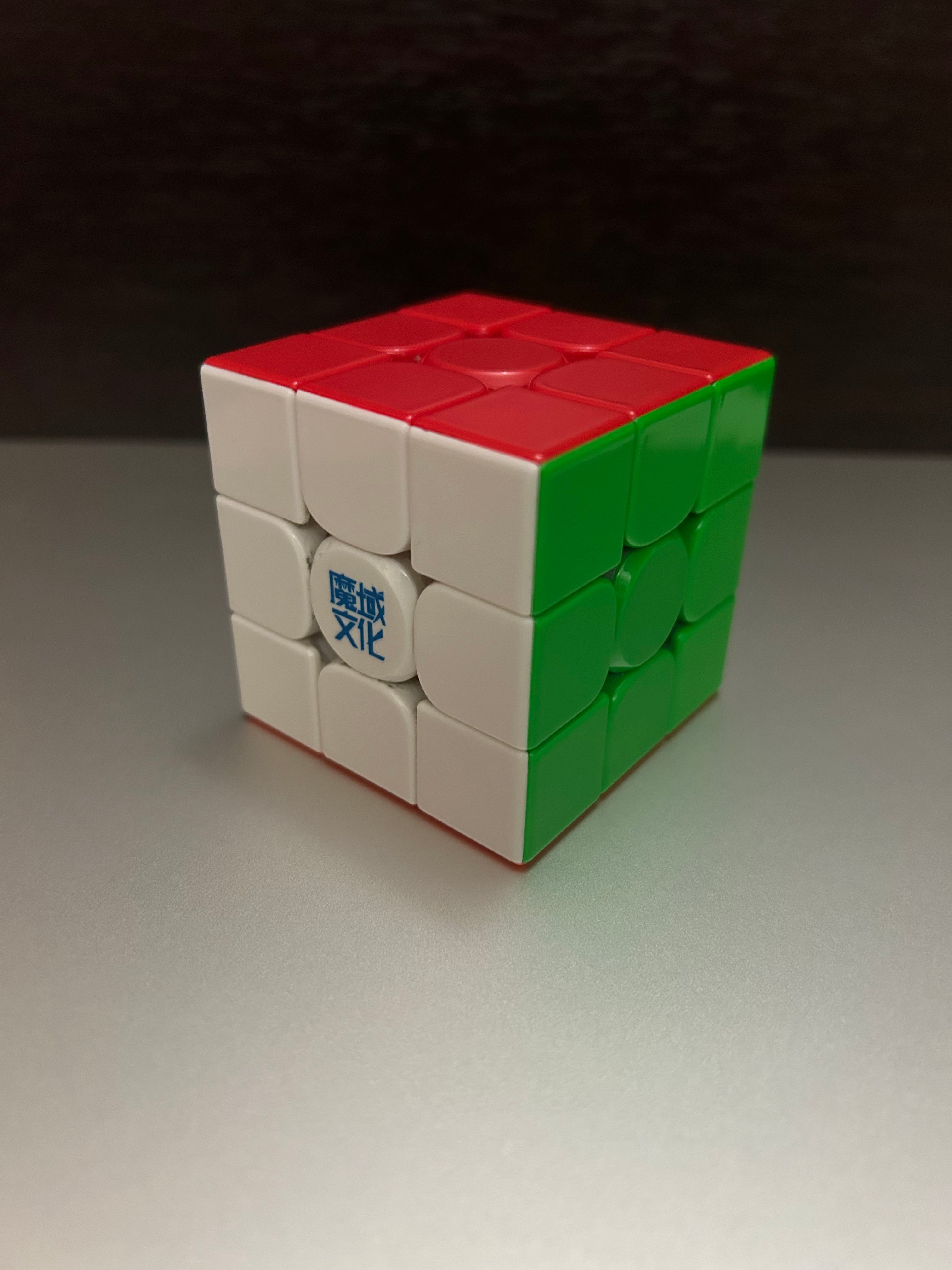
I twist and turn this cube. In fact, I’ve been twisting and turning it for over 10 years now.
Recently, I was asked a question which I never really thought of;
Why am I so attached to it?
It’s a valid question that I didn’t have an immediate answer for. That is why I’m writing this now.
Most people know what the Rubik’s cube is. It’s one of the most popular toys of all time. You’ve likely come across one in person and fiddled with it for a bit, before inevitably giving up and moving on with your life. Maybe you’ve only seen it in cartoons or movies. Either way, the standard imagery associated with it is a 6 sided cube with a unique colour on each face.
That’s what the cube looks like in its solved state. However, only a small amount of the population actually knows how to solve a scrambled cube. Statistics say it’s about 6%. That’s just by the way. I didn’t come to bore you with numbers. So back to why I’m attached to it. Let’s turn the clock back 10 years.
At this point, I’m in JSS3. The clock strikes 12 and they play that Turkish song to let us know it’s time for break. Students erupt out of the building’s front door in search of seating space for their respective crews. The sun casts its rays without mercy as people trudge towards the canteen seeking a cold drink that’d combat the heat. The prefects stroll to their respective duty areas aiming to look busy. A group of JSS2 girls frolic across the school grounds, perhaps in search of their new senior crush of the week. You know, regular secondary school stuff.

Then there’s me, at the table tennis board with my friends. This is what we looked forward to each break time. Reawakening rivalries as we sought revenge against the person who eliminated us last. Another opportunity to duke it out until only one stood atop the table. Thus, claiming the respect and admiration of his peers for being crowned the table tennis champion.
Anyways, that dream was crushed quickly because a bunch of SS3 students bounced us and commandeered the table. Bummer.
Wasn’t much we could do about that, but that was when he appeared. Dennis, the senior that introduced me to the Rubik’s cube. Well, I knew about it long before I met him, but he was the first person I met that could solve it.
As a kid, I loved puzzles, riddles, math, anything that validated my intelligence. That was what I was taught anyways. Being good at things made people look at you differently, especially when those things are typically associated with having a high IQ.
That was why seeing Dennis perform this wizardry before my very eyes, instantly made me in awe of not just him, but the cube. I had to learn how to do this. I saw the way he caught the gaze of those around him when he pulled it out to solve and I wanted that for myself. A bit egotistical looking back on, but I was always a shower rather than a teller back then. So I needed as many ‘cool’ things to show off
I didn’t have a cube at the time so I had to download an app on my phone and use that instead. This made proceedings probably 10 times harder than they should have been. I was trying to learn something that relied a lot on muscle memory, without having the physical cube to develop that. Difficult.
Now, I’m not going to go through the whole process of how to solve the cube. You guys can go watch a YouTube video or TikTok for that. After like a week of mental turmoilI, I finally learnt it through YouTube and using the cube app.
The first time I solved it without having to look at my cheat sheet, I was extremely fulfilled. I really didn’t have to do this but I followed through anyways and that was a win in itself. My joy however, was a short-lived. As happy as I was to have officially learnt how to solve it, there was still a massive problem here.
I. Was. So. Slow.
Look, this was to be expected right? You’re not going to be as fast as someone who’s been doing it for years. And I was solving it on a phone which made things even more sluggish. It was a massive issue to me because it’d take me north of 3 minutes to solve the whole cube. For comparison, Dennis was doing that in less than 20 seconds!
How was I going to hold someone’s attention for 3 minutes while I solved this thing? The math wasn’t mathing. Nevertheless, I knew that if I did this enough times I’d develop the muscle memory, become more efficient and inevitably get faster. So first, I managed to get my hands on an actual cube (I kinda scammed it off of a junior but that’s not really important right now). With this, I did all I could do, I practiced.
I probably spent the next couple of months obsessing over getting faster. You can really just carry it anywhere so I was getting so many reps throughout the day. My mum was losing her mind over the sound of the pieces clunking but what did I care? I had a mission and nothing was going to derail me.
I spent good chunk of that holiday practicing and I eventually cut my times down to an average of about 40-50 seconds. Not quite Dennis level, but much better than where I was before. I was ecstatic to take the cube back to school and show everyone my newly learnt skill.
Of course, they were wowed as most people typically are. I guess it is a rare skill but I think that’s because a lot of people would rather put that time into something they felt was more useful. Nonetheless, I was very pleased at the reactions I got. It felt great that I set out to achieve something and got there regardless of the difficulties I came across.
I was also quick to show my three closest friends. This was the funniest part of all this. While they initially had the same reaction as others, it was what they did next that surprised me. Suddenly, all of them went to get their hands on cubes of their own so they could learn. Talk about birds of a feather.
I loved it though! Up until now, I had only been racing against myself. Now I had a bunch of other competition and that spurred me on more than anything else. I love to compete! And even more so in this situation, because what do you mean I put you on and you’re trying to outdo me? Boy chill.
They all got up to speed and we spent most of our free time in school timing our solves and trying to get as fast as we could. We’d record our averages and track progress each day that passed. We were so hooked that we also spent our not so free time on this. Looking back, it’s crazy that we’d do all our maths classwork quickly just so we could get more time to focus on the real priority there. Speedcubing (Solving the Rubik’s cube fast. I feel it’s self explanatory)
It was a lot of fun having my own mini community. They never got quite as fast as me, but I owe a lot of my improvement to them. As they chased, I had an incentive to get faster, which propelled me to new speeds.
Towards the end of secondary school, exams and all took over so speedcubing took the back burner. We all graduated and went our separate ways, but the memories from this period are some of my fondest.
I haven’t exactly had the same passion for it that I had then. I’ve still improved over the years, but not as rapidly as when I was competing with my friends. It’s been an on and off hobby for the most part. Still, the cube has been with me through thick and thin and always takes me back to a simpler time when I pick it up.
With all this said, I’m sure this provides a lot more context regarding my history with this toy that I got attached to when I was 13. When you hold on to something for so long, you’re bound to give it meaning that it didn’t have before. And so, the Rubik’s cube has become a metaphor that contrasts my view of life. Let me explain.
I see life as a puzzle. You come in and you’re assigned a random scramble. In this case, you don’t know the solution to this puzzle. But still you move through life trying to make meaning of it, you search for purpose. There’s hardly one correct answer but everyone picks the one that aligns most with them or the one the people around them believe in the most. There’s a lot of ambiguity but that’s just part of the human experience. We don’t really know what’s going on but still we keep moving, hoping that someday we feel whole. Maybe that day never comes because there is no solution to this puzzle. Whatever you choose to do, the puzzle ends unsolved when we meet death.
The Rubik’s cube is a solved puzzle. I say that, because its solution is known by everyone. It has only one solved state and that’s when all the colours are aligned on each face. Yet, after thousands of solves, I continue to repeat the process of scrambling the cube and solving it, over and over. I still marginally get faster, I average around 15 seconds now. I don’t really show off as much. So why do I keep going? I do it for myself.
The cube is fair to me in a way life just isn’t at times. Whatever twists and turns I make here are of my doing unlike the random ones life throws at you. The cube makes me feel in control. When I start a solve, I am in charge of my destiny. There’s a calming feeling to that. In a way, the cube has become my cope because it represents what life isn’t. Most times, I don’t know where I’m going. I don’t even know what I’ll do tomorrow. When I pick up the cube, I know how that story ends and that settles me.
The cube has taught me that the journey is much more important than the destination. I’ve realised rather than one big puzzle, life can be seen as multiple small ones. In that sense, with each one I learn to solve, I get a clearer view of the bigger picture. With that lens, I am more equipped to take on anything life throws at me. Maybe it’s more than a hobby.
Some Life Lessons from the Rubik’s Cube
Just start - Most people look at the cube, play with it for a bit then put it down. The curiosity is often there, but not the willingness to take the first step into learning.
One step at a time - We often try to run before we can walk. Master one thing before moving to the next. You can’t solve the whole cube at once, it’s often done layer by layer till you get to the end.
Faster alone, further together - I was able to quickly learn how to solve the cube on my own but having my squad with me pushed me further. Having likeminded people around you is a sure way for more scalable growth.
Go slower to go faster - With the aim of getting better, you will have to take on new methods that will temporarily slow you down until you master them. Do not fear slowing down if it will speed things up in the long run.
Repetition is the mother of mastery - The more reps you do, the more efficient you get. Your brain processes faster, your body develops muscle memory. It has to be good reps though. Nonsense repetition yields nonsense results.
No need to reinvent the wheel - There are people that have been in the same position as you. You don’t need to start from scratch when others have made guidelines on solving the same problems you’ve come across. Seek kelp.
There’s more beneath the surface - A lot of people that saw me solve the cube assumed I could do it because I was good at math or I was just a genius. It’s funny because I was equally as clueless as them at first. They didn’t see the hours I spent getting to that point.
K, taking stuffs from juniors?🌚😂
It felt like I was experiencing it with you. Crazy, yeah.
But the imagery was amazing.
This was a fun walk down memory lane
Very well written Kamal
I told you I'd get around to reading more so here I amm
I know I've definitely struggled with going slower to go faster because who even wants to go slow😭. It makes sense but personally (and I'd hope there's people who relate as well), quick rewards are what I tend to seek. Which is why I eventually gave up on learning to solve the cube. And also because, I didn't see myself ever defeating you and it's easier to lose when you can't do it anyways than when you can💀.
(Also, not you scamming juniors😭😂)